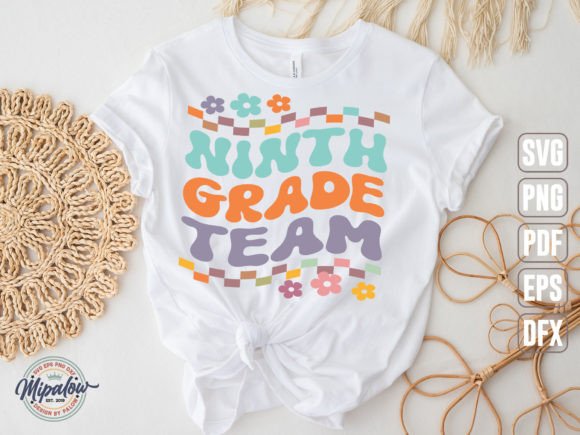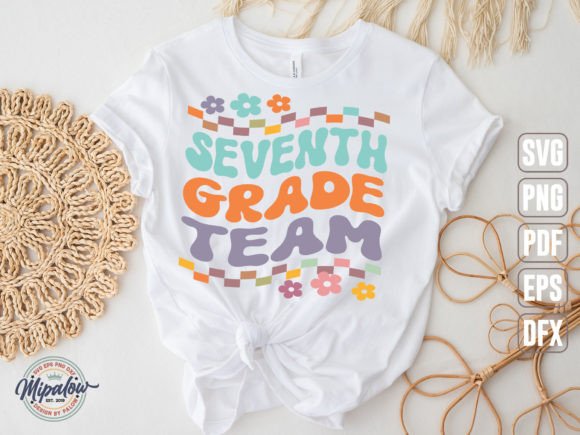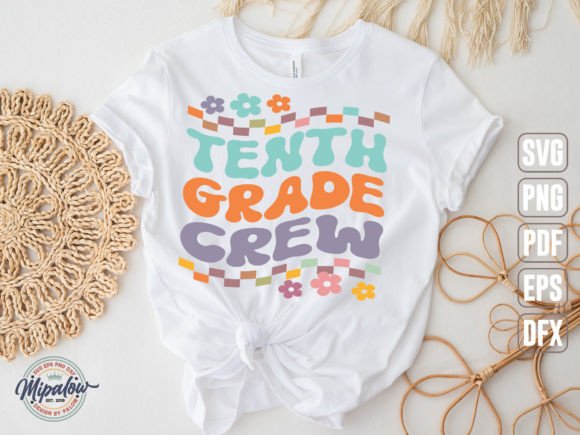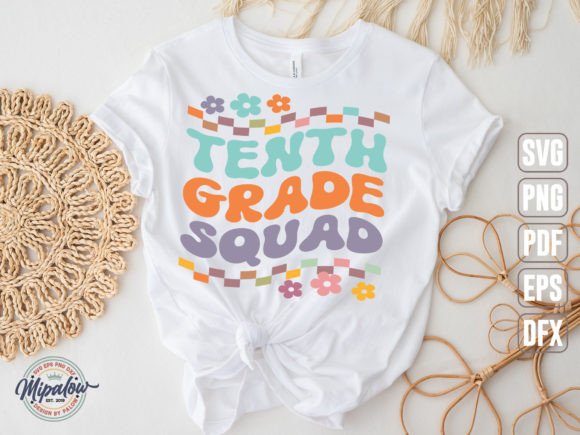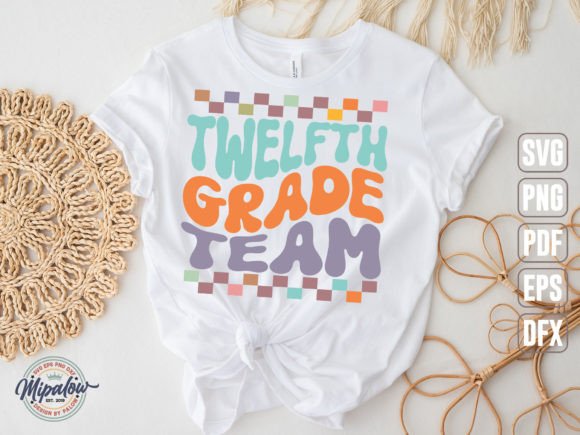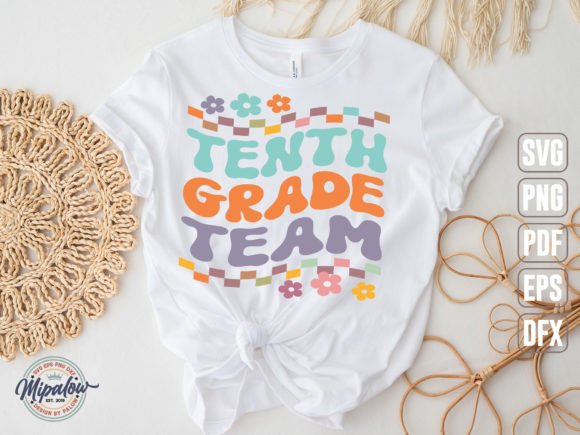
Tenth Grade Team Svg, Wavy Text
As someone who’s stitched thousands of custom projects—from boutique baby onesies to Etsy shop merchandise—I opened Tenth Grade Team Svg, Wavy Text expecting something cheerful and school-spirited. What I found was a clean, playful design with subtle rhythm: letters that flow like a gentle wave rather than a sharp zigzag. It’s not overly ornate, but it’s not flat either—the curvature gives it movement, warmth, and a handmade pulse. That matters. Because in embroidery, mood isn’t just visual—it translates directly into how a finished product feels in the hand, how it photographs on a listing, and whether a customer pauses mid-scroll to imagine it on their teen’s favorite hoodie.
A Real Project Test: Embroidering a Cotton Canvas Tote for Back-to-School Week
I pulled out a medium-weight natural canvas tote—no stretch, no sheen, just sturdy, breathable fabric—and loaded Tenth Grade Team Svg, Wavy Text into my embroidery software. My goal? A subtle but proud “Tenth Grade Team” across the front pocket, sized at 3.8 inches wide. No applique, no backing graphics—just the wavy text, stitched in soft navy thread on off-white canvas.
The first thing I noticed: the curve holds up beautifully in satin stitch. There’s enough letter spacing to avoid thread crowding, and the baseline undulation doesn’t force awkward stitch angles or excessive jump stitches. That’s critical—when you’re stitching on a curved surface like a tote pocket, tight corners or compressed curves can cause puckering or skipped stitches. Here, the design breathes. It also reads clearly at this scale: no letter merges, no thin serifs disappearing into fill density. That’s rare in wavy text designs meant for cutting machines—many sacrifice legibility for flair. Tenth Grade Team Svg, Wavy Text strikes a balance.
Where It Shines (and Where It Needs Thought)
This isn’t a one-size-fits-all embroidery file—but it’s versatile where it counts:
- Custom apparel: Works cleanly on crewnecks and lightweight sweatshirts—especially when paired with light stabilizer and a medium-density fill. Avoid ultra-heavy fleece unless you reduce stitch density manually.
- Personalized gifts: Perfect for graduation swag, team spirit bundles, or end-of-year teacher thank-yous. The tone is upbeat but mature—not childish, not corporate. Teens recognize it; parents approve it.
- Small shop products: As a machine embroidery design, it layers well with simple icons (a star, a laurel, a minimal trophy) without overwhelming. Great for craft fair aprons, kitchen towels, or nursery wall hangings where “team” reads as family unit or sibling squad.
- Digital embroidery file utility: Since it’s built for cutting machines but scaled at 300dpi, it converts cleanly to embroidery formats—provided your digitizer adjusts for stitch type. It’s not an applique design out of the box, but it’s an excellent base for one.
But here’s where judgment matters: Tenth Grade Team Svg, Wavy Text isn’t ideal for every surface or stitch method.
- Avoid tiny hoops: Below 3 inches wide, the wave flattens visually and small curves lose definition—especially in fill stitch. Stick to 3.5" minimum for clear letterforms.
- Textured or stretchy fabrics need testing: On jersey or ribbed knit, the wave can distort if stabilizer isn’t layered precisely. Always run a test on scrap first—and consider switching to running stitch outlines for better control.
- Dark fabric demands contrast checks: This design relies on shape, not heavy shadow or outline. On black twill or charcoal fleece, use a bright thread (kelly green, butter yellow) or add a subtle white underlay—not just for visibility, but to lift the wave’s contour.
- Caps and curved seams require repositioning: The natural arc works *with* a cap’s dome—if placed correctly—but won’t auto-adjust. You’ll need to rotate and scale manually in your hoop preview.
What It Adds to Your Finished Product—Beyond the Stitch
Embroidery isn’t just about thread count—it’s about perception. Tenth Grade Team Svg, Wavy Text elevates perceived value because it feels intentional, not templated. It says “this was chosen, not slapped on.” That builds trust with buyers browsing your Etsy shop or boutique rack. Customers don’t buy fonts—they buy feeling. And this design delivers quiet confidence: academic pride without pressure, team spirit without cliché.
For craft business owners, that nuance matters. When you pair it with a well-chosen fabric (like a brushed cotton tea towel or structured linen pillow cover), it reads as curated—not craft-supply-store-generic. It supports brand consistency too: use it across a back-to-school collection (tote + tee + patch set), and the wavy motif becomes a subtle signature—recognizable but never repetitive.
Practical Designer Notes Before You Stitch
Before loading Tenth Grade Team Svg, Wavy Text into your machine:
- Test on scrap fabric matching your final project’s weight and texture—even if it’s “just text.” Wave distortion shows up fast on unstable weaves.
- Check thread color contrast in both natural and artificial light. A muted sage may vanish on olive canvas until you hold it near a window.
- Review stitch density in your software. If the file came as a vector SVG only, confirm whether it’s been pre-digitized—or if you’ll need to convert and adjust for satin vs. fill behavior.
- Confirm hoop size compatibility. The wave’s width affects placement margins—especially on narrow surfaces like cap fronts or baby onesie hems.
- Inspect corners and inner curves at 400% zoom. Tiny overlaps or stray nodes can cause thread breaks or misalignment.
- Mock it up in black-and-white first. Does the rhythm still read? If it flattens in grayscale, it may lack enough tonal separation for low-contrast fabric combos.
- Verify licensing. Since this listing is for digital files only, double-check whether commercial use (e.g., selling embroidered totes on Etsy) is permitted under the seller’s terms.
Bottom line? Tenth Grade Team Svg, Wavy Text isn’t flashy—but it’s thoughtful. In a market saturated with overdesigned, overcomplicated graphics, its restraint is its strength. It’s the kind of embroidery file that disappears into the product while making it feel more personal, more polished, more *yours*. Use it where clarity meets charm—and always, always test before you commit thread.