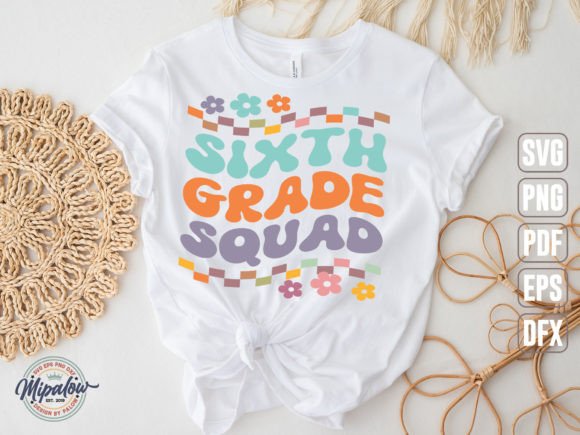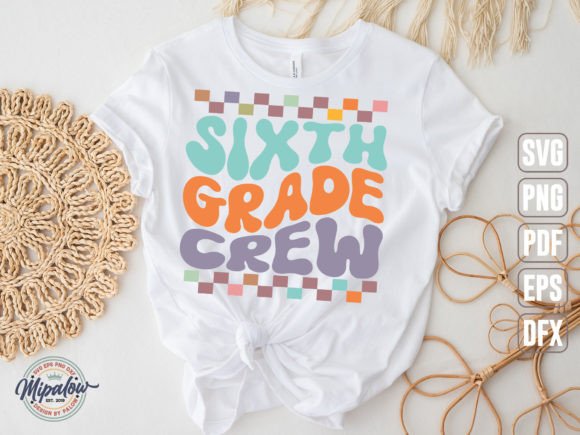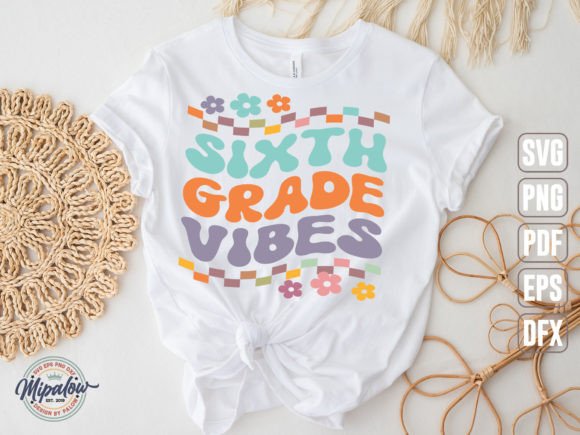
Sixth Grade Vibes SVG: Wavy Text
First Impressions: Playful, Nostalgic, and Just Right for Youthful Charm
As someone who’s stitched hundreds of text-based embroidery files—from crisp monograms to whimsical quotes—Sixth Grade Vibes SVG: Wavy Text immediately stands out for its lighthearted rhythm. It’s not overly cutesy or cartoonish; instead, it balances retro school-day energy with clean, confident curves. The wavy baseline gives movement without sacrificing legibility—a rare win for text-heavy embroidery files. I opened it in my digitizing software and instantly pictured it on a soft cotton tote bag for a middle-school graduation gift: cheerful but not childish, nostalgic but not dated.
Real-World Fit: Where This Design Earns Its Keep
I tested Sixth Grade Vibes SVG: Wavy Text as the centerpiece for a custom embroidered sweatshirt order—part of a small batch for a local after-school program. The design scaled beautifully at 4.2” wide (hoop-friendly for most mid-arm machines), and its open letterforms avoided the “blobbing” that often plagues wavy fonts when stitched densely. On medium-weight fleece, the satin stitch outlines held crisp edges, while the subtle spacing between letters allowed fabric breathability—critical for wearables meant for active kids.
It also translated well to baby embroidery: paired with a tiny embroidered apple or pencil icon, it softened into sweet nursery decor on a linen pillow cover. For Etsy sellers, this is a quietly versatile asset—it reads clearly in printable mockups, works across age groups (tweens through young adults), and pairs naturally with neutral or pastel thread palettes. As a craft business owner, I appreciate how it avoids over-designing; it doesn’t need embellishment to feel intentional.
Where Caution Applies: Texture, Scale, and Fabric Realities
That said, Sixth Grade Vibes SVG: Wavy Text isn’t universally forgiving. On highly textured fabrics like terry cloth or bouclé, the wave’s subtlety can get lost—especially in smaller hoop sizes under 4”. I recommend avoiding it for toddler onesies unless enlarged to at least 3.5”, and skipping ultra-thin fabrics (like lightweight rayon challis) unless paired with tear-away + cutaway stabilizer combo. Stretchy knits? Possible—but only with proper hooping technique and reduced stitch density (check your file’s fill stitch settings before running).
Dark fabric demands attention too: the natural flow of the waves reads best with high-contrast thread (e.g., white or pale yellow on navy). On black or charcoal, avoid light gray or beige threads—they’ll mute the design’s bounce. And while it works on curved surfaces like caps, keep placement above the bill seam where tension stays even; lower crown areas risk distortion.
Stitching Clarity & Customer Perception
This isn’t just about technical execution—it’s about how your finished product lands with buyers. Sixth Grade Vibes SVG: Wavy Text feels handmade without looking amateurish. That matters for boutique branding and personalized gifts: customers notice clean transitions between letters, consistent wave amplitude, and balanced negative space. When stitched well, it elevates a basic sweatshirt into something memorable—not generic, not trendy-for-a-minute, but warmly human.
For Etsy sellers and small shop owners, that translates directly to trust. A buyer ordering a “Sixth Grade Graduation Gift” expects joy, not jumbled letters. This design delivers that tone reliably—if you respect its limits. It won’t carry heavy branding weight like a logo, but it excels as expressive, moment-driven embroidery: back-to-school tees, teacher appreciation aprons, holiday stockings with “My First 6th Grade Christmas,” or embroidered tea towels for a classroom-themed kitchen.
Practical Designer Notes Before You Stitch
- Always test first: Run Sixth Grade Vibes SVG: Wavy Text on scrap fabric matching your final project’s weight and stretch.
- Check thread color contrast in both natural and artificial light—some pastels fade visually on dark backgrounds.
- Review stitch density: If your version includes fill elements (not just outlines), confirm they’re optimized for apparel—not dense enough to stiffen fabric, not sparse enough to look patchy.
- Confirm hoop size compatibility: While it scales well, verify your machine’s max width fits your intended application (e.g., cap front vs. tote center).
- Inspect corners and curves: Zoom in on the tightest wave peaks—do they show smooth vector paths? Jagged vectors digitize poorly.
- Mock it in black and white: This reveals clarity issues invisible in color previews—especially important for craft fair displays or digital listings.
- Use appropriate stabilizer: Medium-weight cutaway for stable fabrics; hybrid for knits; tear-away for stable cottons.
- Licensing check: Since this is a digital embroidery file listed under Crafts and Graphics, confirm commercial use rights before selling finished embroidered items or bundling it into digital product kits.
Final Thought: A Thoughtful Tool, Not a Trendy Gimmick
Sixth Grade Vibes SVG: Wavy Text won’t replace your go-to script font—but it fills a specific, joyful niche with quiet professionalism. It’s the kind of design that makes a customer smile when they unbox a custom embroidered pillow, or a parent pause mid-scroll on your Etsy shop because the text *feels* right. For embroidery designers building reliable, repeatable assets—and for crafters who value authenticity over flash—it’s a grounded, usable, and genuinely pleasant addition to your library of embroidery files. Just remember: its charm lives in context, care, and craft—not just the curve.