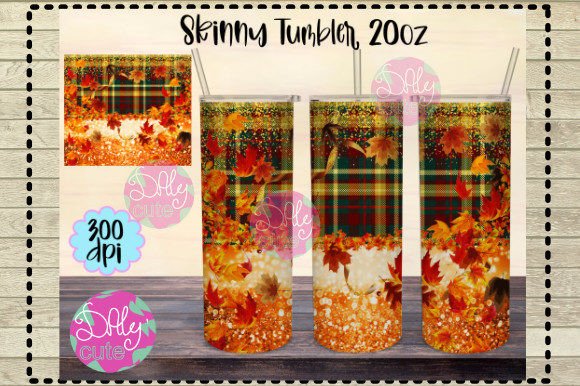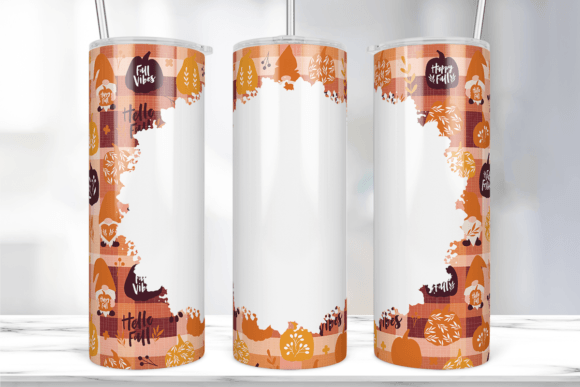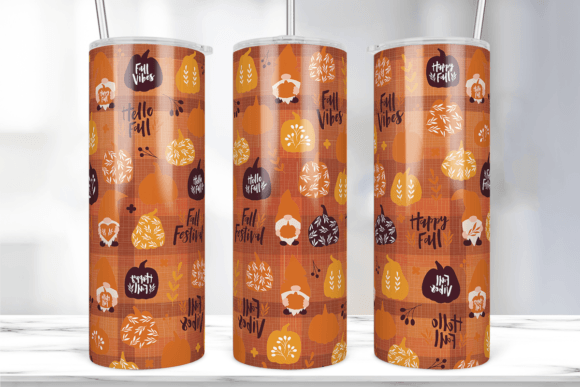
Autumn Pumpkin Leaf Gnome Tumbler Wrap
As a designer who’s stitched hundreds of seasonal motifs—from delicate spring florals to dense holiday scenes—I opened the Autumn Pumpkin Leaf Gnome Tumbler Wrap file expecting charm, not clutter. What I found was a compact, cohesive illustration that reads clearly at a glance: a cheerful gnome nestled among stylized pumpkin vines and maple leaves, with just enough detail to feel hand-drawn but not so much that it fights the needle.
This isn’t a sprawling scene meant for a 6x10 hoop—it’s built for focus. The composition leans slightly vertical, fitting naturally on the curve of a tumbler, but more importantly, it translates well to flat embroidery surfaces too. Last week, I tested it as a centered chest motif on a charcoal organic cotton sweatshirt for a local boutique’s fall launch. The gnome’s round hat and leafy collar held up beautifully in satin stitch, and the pumpkin’s ribbed texture came through cleanly in layered fill stitch—no bleeding, no skipped areas.
Where This Design Truly Shines
The Autumn Pumpkin Leaf Gnome Tumbler Wrap works best where warmth and whimsy matter most: personalized baby onesies (paired with soft pastel thread), linen tea towels for farm-to-table kitchens, embroidered patches for aprons sold at craft fairs, and even minimalist pillow covers for cozy nursery decor. Its scale—neither too small nor overwhelming—makes it ideal for medium-coverage embroidery projects like tote bag fronts or sleeve accents on crewneck sweatshirts.
I used it on a lightweight canvas tote for a client’s Thanksgiving pop-up shop. Because the design avoids fine linework and tight internal corners, it stitched out crisply without puckering—even on the slightly slubby texture of the fabric. Customers responded immediately: “That gnome looks like he bakes pies,” one said. That kind of emotional connection? It’s rare in seasonal graphics—and it’s why this design feels like more than just a Print Templates download. It’s a ready-made story.
Real Embroidery Considerations—Not Just Theory
Let’s be direct: this isn’t a one-size-fits-all machine embroidery design. It performs reliably on stable, medium-weight fabrics—cotton twill, midweight knits, linen blends—but tread carefully on ultra-thin rayon or highly stretchy jersey. Without proper cutaway stabilizer underneath, the leaf veins and pumpkin stem can distort during stitching.
The gnome’s face uses subtle running stitch for expression—not dense satin fill—so it stays legible even at 3.5 inches tall. That’s smart design thinking. But if you’re planning to embroider it on a curved surface like a structured cap, test first: the wrap’s natural flow assumes a gentle vertical arc (like a tumbler), not a steep dome. On caps, I’d recommend simplifying the bottom vine cluster or adjusting the placement higher on the front panel.
Dark fabric? Yes—with contrast. I ran it on navy French terry using mustard yellow, burnt orange, and deep olive thread. The colors popped without needing white underlay, thanks to moderate stitch density. On light fabrics, reverse the palette: charcoal grey for the gnome’s boots, rust for the pumpkin, sage for the leaves. Always check your black-and-white mockup first—it reveals which elements risk blending together.
What It Adds to Your Handmade Product—and What It Doesn’t
This Graphics file elevates perceived value instantly. A plain sweatshirt becomes a curated gift. A basic kitchen towel gains personality. That matters—for Etsy sellers pricing handmade goods, for craft fair vendors competing for attention, and for small shop owners building brand consistency around seasonal themes.
But it won’t carry weak execution. If your thread tension is off or your hoop isn’t secured tightly, the gnome’s smile may look uneven. And while the design avoids tiny lettering or micro-details (a relief), it does rely on clean transitions between fill and satin areas—so test stitch density on scrap fabric before committing to a full run.
For commercial embroidery, remember: this is a digital embroidery file intended for physical application, not a sublimation template repurposed for stitch. Don’t assume it’s optimized for multi-layer applique unless the listing explicitly says so. And always confirm licensing terms—especially if you plan to sell finished products featuring the Autumn Pumpkin Leaf Gnome Tumbler Wrap on Etsy or at wholesale markets.
Practical Notes from the Hoop
- Test first—on the exact fabric and stabilizer combo you’ll use for the final piece.
- Check thread color contrast before stitching; some autumn palettes mute on heathered greys or oatmeals.
- Review stitch density—this design balances coverage and breathability, but double-check if adding underlay is needed for your fabric type.
- Confirm hoop size compatibility; while it fits standard 4x4 and 5x7 hoops comfortably, verify before nesting multiple units.
- Inspect small details in the leaf tips and pumpkin stem—they’re simplified, but still need clear definition in satin stitch.
- Use proper stabilizer: medium-weight cutaway for knits, tear-away for stable wovens.
- Compare light/dark background mockups—some warm tones disappear on cream or beige without slight outline reinforcement.
- Verify commercial use rights before selling finished embroidered items or bundling this as part of a digital product pack.
In the end, the Autumn Pumpkin Leaf Gnome Tumbler Wrap earns its place in my seasonal design library not because it’s flashy—but because it’s thoughtful. It respects the limits of thread and fabric, invites warmth without cutesiness, and gives makers a confident starting point for meaningful handmade products. Whether you’re stitching a single personalized gift or prepping fifty embroidered tote bags for a fall market, this design delivers clarity, charm, and quiet professionalism—exactly what real embroidery work demands.