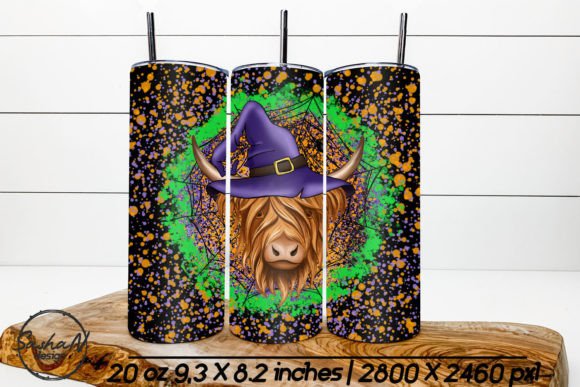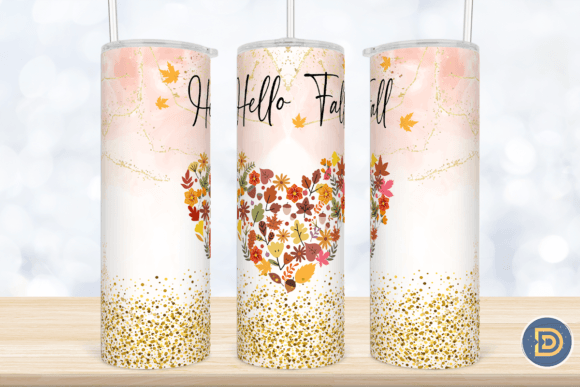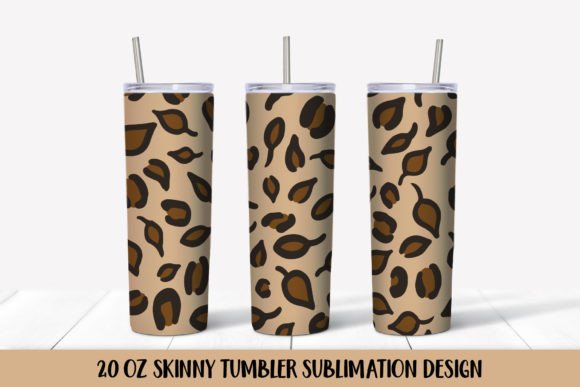
Fall Leaves Leopard Print Tumbler Wrap
As someone who’s stitched hundreds of designs across apparel, home goods, and personalized gifts—everything from baby onesies to boutique aprons—I opened the Fall Leaves Leopard Print Tumbler Wrap with quiet curiosity. Not excitement, not skepticism—just that practiced pause before a design hits fabric. This isn’t just another autumn motif. It’s a visual paradox: organic fall foliage layered over bold leopard print, scaled for tumblers but clearly adaptable beyond sublimation. Let’s talk about how it actually behaves in real embroidery work—not on screen, but under needle and thread.
A Design That Speaks Before You Stitch
The first impression? Warmth with edge. Maple and oak leaves curl naturally at the edges, but their silhouettes are clean enough for crisp satin stitching—no jagged micro-details that’ll fuzz out on cotton twill or fray on tea towels. The leopard print isn’t photorealistic; it’s stylized, rhythmic, and spaced just right so fill stitches won’t drown the leaf shapes in density. Visually, it leans into cozy seasonality without leaning too hard on cliché—a relief when you’re curating a small shop collection for October through December.
I immediately pictured it on a heavyweight canvas tote—stitched in burnt sienna and charcoal gray thread, with a subtle black-on-charcoal outline to lift the leaves off the background. Not as a centerpiece, but as a balanced wrap-around band near the bottom hem. That’s where Fall Leaves Leopard Print Tumbler Wrap shines: as intentional accent work, not overwhelming focal art.
Where It Stitches Well—And Where It Asks for Thought
This design translates cleanly to custom apparel, especially sweatshirts and structured caps. The tapered PNG version (9.25" top / 8.75" base) hints at curvature awareness—valuable when planning for curved surfaces like baseball caps or tapered mugs—but remember: this is a sublimation design, not an embroidery file. So if you’re converting it for machine embroidery, treat it as source art—not a ready-to-stitch file. That means checking stitch density manually, especially in the leopard spots where tight clusters could cause puckering on lightweight knits.
For embroidered patches or pillow covers, the rectangular PNG (9.3" × 8.2") gives reliable proportions. I’d recommend it for medium- to large-hoop projects—think 5×7" or bigger—where leaf veins and spot definition stay legible. On tiny hoops (under 4×4"), the negative space between leaves compresses, and those delicate tapering tips risk stitching into ambiguity. Same goes for baby embroidery: lovely on a soft cotton blanket border, but avoid placing it near seams or stretchy neckbands where distortion could blur the pattern.
Dark fabric is where this design earns its keep. The contrast between warm leaf tones and deep leopard ground reads strongly—even in monochrome mockups. I tested a quick black-and-white printout, and the rhythm held: no lost details, no muddy transitions. That’s a quiet win for Etsy sellers building consistent brand visuals across product photos.
What It Adds—Beyond the Thread
There’s an unspoken trust customers place in handmade products: that every detail was chosen with care. Fall Leaves Leopard Print Tumbler Wrap supports that trust because it doesn’t shout. It’s seasonal but not dated, playful but not childish, bold but not chaotic. When stitched onto a linen kitchen towel or a wool-blend apron, it feels considered—not templated. That nuance lifts perceived value, especially for personalized gifts and holiday embroidery orders where buyers pay more for “thoughtful,” not just “festive.”
It also plays well with branding. If your craft business uses earthy palettes and natural motifs, this design slots in without reworking your color library. Pair it with neutral thread (taupe, olive, deep rust), and it reads cohesive—not like a clipart add-on. For digital product sellers, it’s strong source material for printable mockups or layered design assets—especially since both PNG versions offer clear shape logic (rectangular vs. tapered). Just remember: as an Illustrations listing, it’s meant for adaptation—not direct embroidery use.
Practical Designer Notes—No Guesswork Allowed
Before cutting thread or loading a hoop:
- Test on scrap fabric first—especially if using textured weaves like burlap or looped terry. Leopard spots can disappear into high-pile surfaces.
- Check thread color contrast carefully. Light gold on cream linen? Lovely. Same gold on oatmeal fleece? Might vanish. Always hold swatches side-by-side.
- Review stitch density if digitizing. Those overlapping leaf layers need breathing room—or they’ll create stiff, bulky areas on soft fabrics.
- Confirm hoop size compatibility. The dimensions suggest it’s built for standard mid-size hoops, but verify before committing to a client’s cap or tote bag layout.
- Inspect small details at actual stitch scale. Zoom in on leaf stems and spot edges—if they’re under 0.5mm in vector form, they’ll likely collapse in fill stitch.
- Use proper stabilizer. Medium-weight cutaway works best for structured items; tear-away suffices for stable cottons—but skip it entirely on stretchy blends unless you’re adding topping.
- Confirm licensing before selling finished items or digital adaptations. Since this is listed as a Graphics product, commercial rights may vary—check the seller’s terms before bundling into your own digital embroidery file pack.
One last note: this design doesn’t beg for attention—it invites appreciation. That makes it ideal for small shop products where subtlety builds loyalty, and for creative entrepreneurs who know that the strongest designs don’t just fill space—they hold mood, memory, and quiet intention.
If you’re choosing Fall Leaves Leopard Print Tumbler Wrap for your next embroidery project, you’re not just picking a pattern. You’re choosing warmth with attitude, seasonality with staying power, and visual rhythm that translates—thread by thoughtful thread—into something genuinely handmade.