Golf SVG, Wavy Text
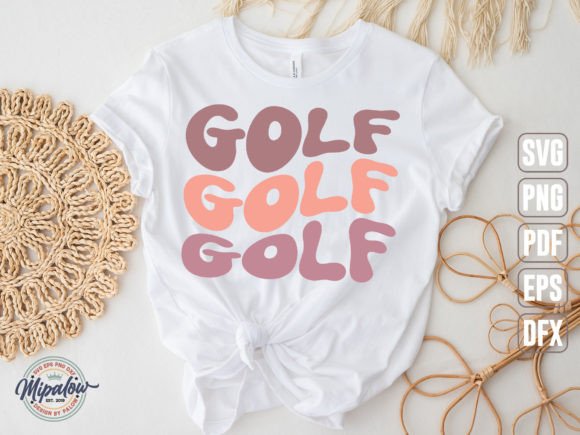
As someone who’s stitched hundreds of custom projects—from boutique baby onesies to Etsy shop merchandise—I opened Golf Svg, Wavy Text expecting something playful but functional. What I found wasn’t just a decorative flourish—it was a mood: lighthearted, sporty, and quietly confident. The wavy baseline gives it motion without chaos; the letterforms are rounded but legible, friendly but not childish. It reads like a smile on fabric—perfect for a summer golf outing, a dad’s birthday gift, or a small-batch apparel line with personality.
First Impressions: Where This Design Naturally Lives
This isn’t a bold, block-letter logo meant for chest embroidery on a heavyweight sweatshirt. It’s softer. More intentional. When I visualized Golf Svg, Wavy Text on a natural linen tea towel, it clicked: it belongs where craftsmanship meets casual charm. Think embroidered kitchen towels for a golf-themed wedding favor, minimalist tote bags for a local pro shop, or a single-line monogrammed patch sewn onto a canvas apron. It’s also strong as a secondary design—say, tucked into the corner of a baby blanket or along the hem of a toddler’s polo shirt.
The wave isn’t exaggerated, so it won’t fight your stitch execution. That’s critical. Some wavy fonts collapse under satin stitch tension or distort on stretchy knits—but this one holds its shape. It feels designed *for* embroidery, not just adapted from a vector graphic.
Real-World Use: What Works (and What Needs Thought)
I tested Golf Svg, Wavy Text as part of a custom embroidered tote bag project—cotton canvas, medium-weight stabilizer, 40-weight polyester thread. At 3.5 inches wide, it stitched cleanly in a standard 4×4 hoop. The curves flowed smoothly; no skipped stitches, no thread breaks. On a sweatshirt? Same result—but only after switching to cutaway stabilizer and reducing stitch density slightly in the preview software. The design’s gentle arc actually helps it drape better over textured fleece than rigid, angular lettering would.
For baby items—like a onesie or burp cloth—I’d scale it down to 2.25 inches max and avoid dense fill areas near the neckline seam. The wavy baseline makes alignment forgiving, which is a real win when hooping tiny garments. As a holiday embroidery option? Surprisingly versatile. Pair it with a subtle golf club icon or monogrammed initial for a personalized Christmas gift—no need to force seasonal elements. Its warmth reads as thoughtful, not themed.
Where caution applies: curved surfaces like caps. The wave can flatten or warp if hooped too tightly on a structured front panel. Also, on dark fabrics, avoid light thread unless you’re using a high-contrast underlay—this design relies on clean edges, and low-contrast stitching blurs its charm. And while it’s lovely on smooth cotton or twill, skip it on highly textured burlap or loosely woven gauze—the wave detail gets lost.
What It Adds to Your Finished Product
Golf Svg, Wavy Text elevates perceived value—not through flash, but through intentionality. Customers notice when lettering feels *designed*, not dropped in. That wave implies care. It signals handmade product authenticity, especially next to generic fonts. For Etsy sellers or small shop owners, that nuance builds trust: buyers feel they’re getting something curated, not mass-produced.
It also supports brand consistency. If your craft business leans into relaxed, outdoorsy, or family-friendly aesthetics, this design fits right in—whether you’re branding embroidered patches for a junior golf camp or labeling handmade kitchen linens. It doesn’t shout; it invites. And that kind of quiet confidence translates directly to buyer engagement, especially in gift contexts where presentation matters.
Practical Designer Notes Before You Stitch
- Always test on scrap fabric first—especially if pairing with applique design or layered text.
- Check thread color contrast early: try black, navy, forest green, and charcoal on both light and dark fabric mockups.
- Review stitch density in your embroidery software. If the wave feels too heavy, reduce fill stitch density by 10–15%—it maintains clarity without bulk.
- Confirm hoop size compatibility. While it fits comfortably in a 4×4, verify clearance if combining with other elements.
- Inspect small details at 200% zoom—look for tight corners or overlapping nodes that could cause stitching hiccups.
- Test in black-and-white printable mockup mode before sending to machine—this reveals unintended weight imbalances.
- Use proper stabilizer: tear-away for stable wovens, cutaway for knits or stretchy fabric.
- Verify licensing terms before selling finished products or digital embroidery file bundles—this listing is for digital files only, and commercial use permissions vary.
A Final Thought for Craft Business Owners
If you’re curating design assets for your shop—or building a library for repeat clients—Golf Svg, Wavy Text earns its place not because it’s trendy, but because it’s reliable. It works across categories: custom apparel, embroidered patch collections, holiday embroidery kits, even printable mockups for your Etsy listings. It bridges Crafts and Graphics seamlessly—functional as a cutting file, expressive as an embroidery file. And in a market flooded with generic fonts, that quiet wave says something: “This was made for people, not just machines.”
That’s the kind of detail your customers feel—even if they can’t name it. And that’s what keeps them coming back.