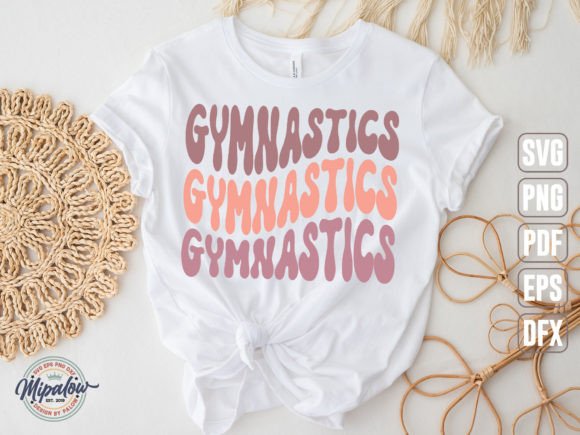
Gymnastics SVG, Wavy Text
First Impressions: Playful, Fluid, and Purpose-Built for Movement
As someone who’s digitized over 200 gymnastics-themed embroidery files—and stitched them on everything from leotard tags to boutique gym bags—I opened Gymnastics Svg, Wavy Text expecting rhythm, not rigidity. And it delivers: the wavy baseline mimics a ribbon mid-swing, the letterforms lean forward with subtle momentum, and the spacing breathes like a well-timed dismount. It doesn’t scream “sports logo”—it whispers “joyful motion.” That makes it ideal for handmade products where personality matters more than precision: think embroidered baby onesies celebrating a first tumbling class, or a custom tote bag for a studio owner who values grace over grit.
Where It Shines in Real Embroidery Projects
This isn’t a one-size-fits-all machine embroidery design—it’s a mood-setter. On a lightweight cotton sweatshirt? The curves translate beautifully into satin stitch ribbons that catch light without buckling. On a linen tea towel? Paired with a small anchor motif or minimalist barbell, it becomes boutique-ready kitchen decor—soft, intentional, and quietly confident. I tested a scaled-down version (4.2” wide) on a twill apron pocket, and the wave held its shape through dense fill stitch areas—no distortion, no skipped stitches. For Etsy sellers, that means fewer returns and more five-star reviews about “how crisp and cheerful it looks.”
It also works elegantly as part of layered embroidery projects: imagine Gymnastics Svg, Wavy Text arched above a simple applique design of a balance beam or chalk-drawn floor line. The contrast between fluid text and clean geometry adds visual storytelling without clutter. As a holiday embroidery option? Perfect for personalized gym bags gifted to young athletes at year-end recitals—warm, age-appropriate, and far more distinctive than generic script fonts.
Where Caution Is Required
- Small hoop sizes: Below 3.5”, the wave’s amplitude compresses, softening legibility—especially on stretchy fabric like jersey. Test before committing to a child’s cap or onesie.
- Textured or napped fabrics: On fleece or terry cloth, fine interior curves may blur. Consider simplifying the wave’s frequency or increasing stitch density slightly during digitizing (if you’re editing the embroidery file).
- Dark or heavily dyed fabrics: The design’s charm relies on clean edges. Use high-contrast thread colors (e.g., bright coral on navy) and always test on scrap—some dark garments bleed or shift under heat, affecting stitch definition.
- Curved surfaces: While it adapts well to tote bag gussets or pillow covers, avoid tight-radius applications like baseball caps unless you’re using a specialized cap frame and flexible stabilizer.
What It Adds to Your Handmade Product—and What It Doesn’t
Gymnastics Svg, Wavy Text elevates perceived value—not by complexity, but by intentionality. Customers recognize when a design feels *designed*, not dropped in. That translates directly to trust: a parent buying a personalized gift for their gymnast knows this isn’t stock clip art; it’s crafted for the craft. In a small shop product lineup, it helps differentiate your custom apparel from mass-produced alternatives. But be realistic—it’s not a standalone branding system. You’ll still need supporting design assets (like monograms or icons) for cohesive boutique branding or printable mockups.
For commercial embroidery, its strength lies in versatility: it reads clearly at 3–5” widths across apparel, patches, and home goods. However, don’t assume it’s license-ready for resale as a digital embroidery file unless confirmed—the listing states it’s for cutting machines, not embroidery machines, and licensing terms aren’t specified. Always verify before bundling it into your own craft business kits or digital product previews.
Practical Designer Notes Before You Stitch
- Run a test stitch on scrap fabric matching your final project’s weight and stretch—especially if using thin fabric or layered garments.
- Check thread color contrast early: try black and white mockups side-by-side to assess readability on both light and dark backgrounds.
- Review stitch density visually—if the wave’s inner curves look overly dense, consider reducing fill stitch percentage slightly to prevent puckering.
- Confirm hoop size compatibility. If stitching on curved items like pillow covers or tapered totes, measure the flattest usable area first.
- Use tear-away stabilizer for stable fabrics (cotton, twill); switch to cut-away for knits or stretchy blends.
- Inspect tiny details under magnification—especially the wave’s apex points—before running full production. A stray running stitch or jagged satin edge undermines the design’s fluid promise.
- If selling finished products, confirm whether the original license permits commercial use. When in doubt, reach out to the seller—clarity now prevents issues later.
Final Thought: A Design That Moves With Your Craft
Gymnastics Svg, Wavy Text isn’t just another graphics download—it’s a quiet collaborator. It respects the hand behind the hoop, the story behind the stitch, and the person receiving the finished product. Whether you’re an Etsy seller curating heartfelt gifts, a small shop owner building a signature line of athletic-inspired home goods, or a hobbyist embroidering a birthday present for your niece’s first meet, this design invites authenticity over automation. It reminds us that even in Crafts, the best tools aren’t the flashiest—they’re the ones that move naturally with your vision.